Special Exhibition

Special Presentation

Ornamenta: Textile Images of the Middle Ages

29 April – 11 November 2012

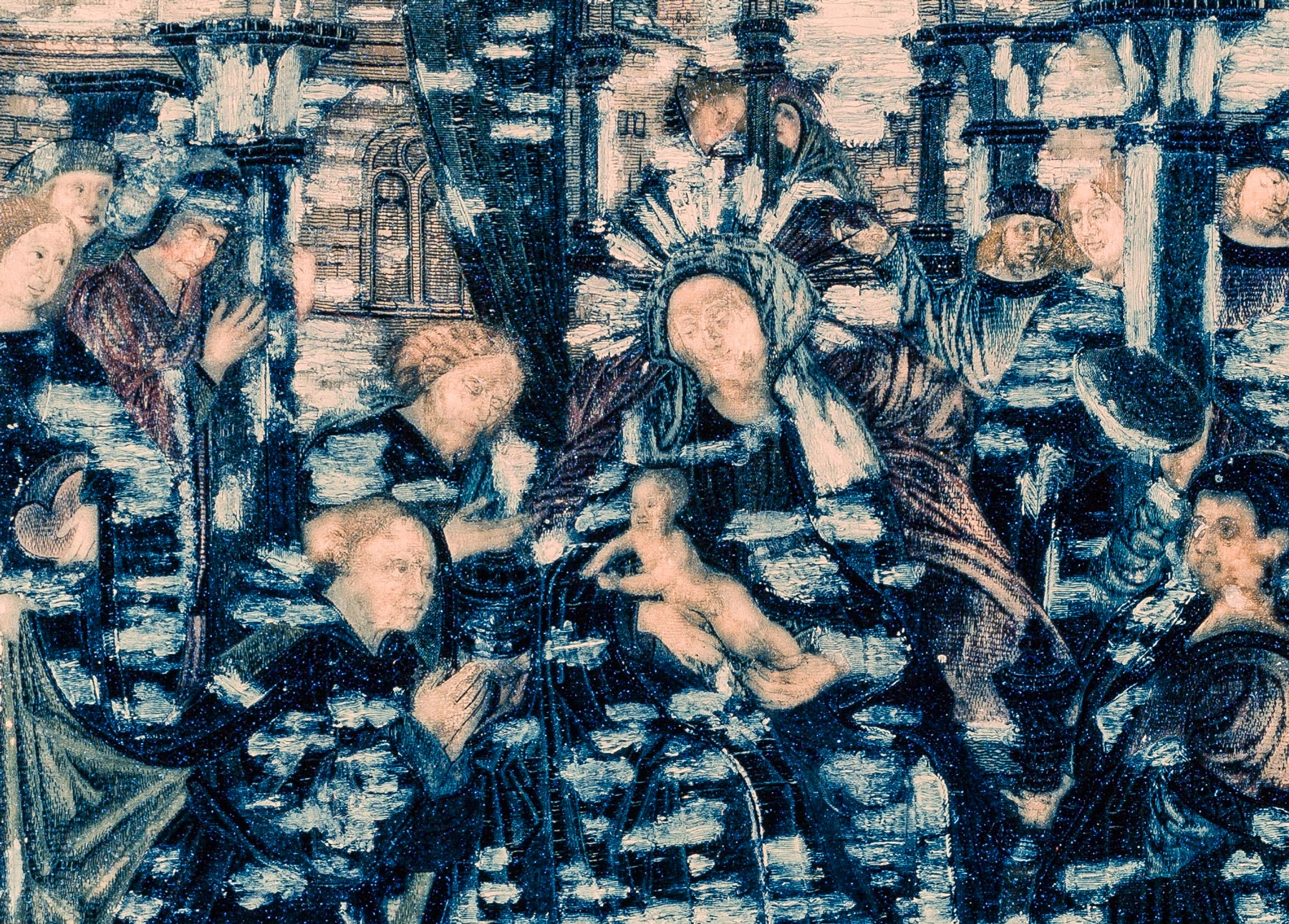
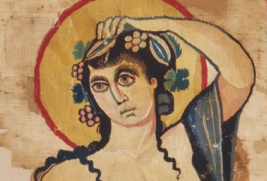
The interiors of medieval churches were adorned with magnificent tapestries, finely painted banners, subtly embroidered altar hangings and the liturgical vestments worn by the clergy. Movable by their very nature, textiles could easily be taken down and replaced by others more appropriate to the individual feasts celebrated throughout the liturgical year. The 2012 special exhibition presents such ornamenta, as these decorative textiles were known, and explains their function and iconography.
PressetextCommuniqué de pressePress ReleasePressetextMaster’s Thesis Poster

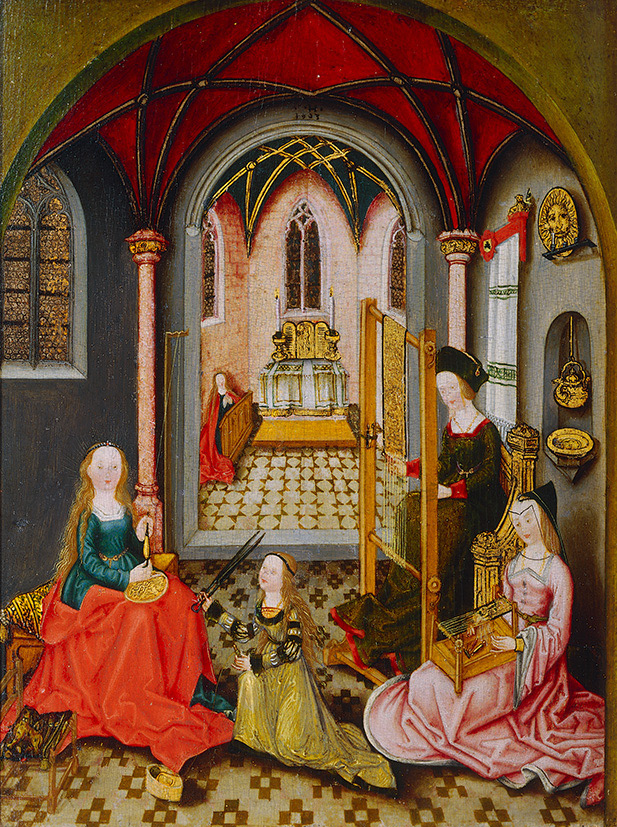
 Textile images are more than an expression of medieval female piety; they are above all the products of a professional luxury industry using a variety of techniques to turn silk, gold and pearls into precious artefacts. Fig.: Mary’s needlework in the church ("Vita activa – vita contemplativa"), Upper Rhine (?), painter [S.]H., 1503, tempera on wood, inv. no. 14.14.66

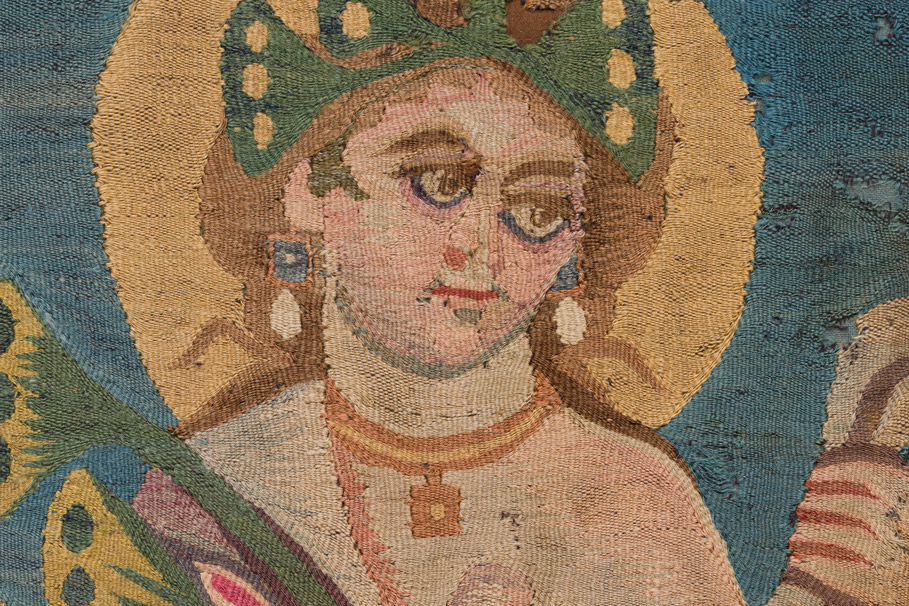
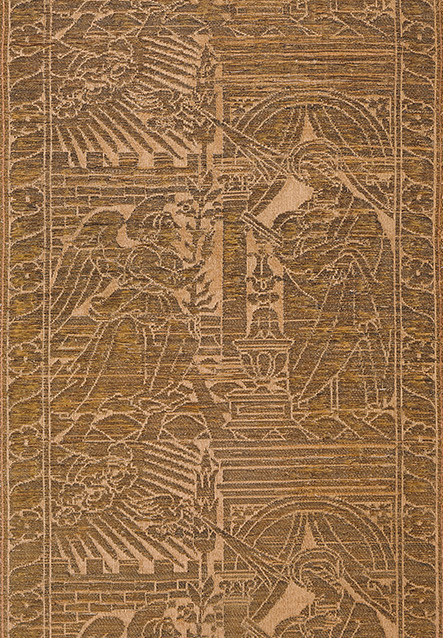
Woven images Finely woven silks are characterised by their pattern repeats, while their appearance is defined largely by the type of weave. Tapestries, by contrast, offer greater freedom of design, and derive their effect mainly from size and material texture. Fig.: Woven orphrey with the Annunciation to the Virgin, Italy (Florence?), early 16th century, silk weaving, inv. no. 333a

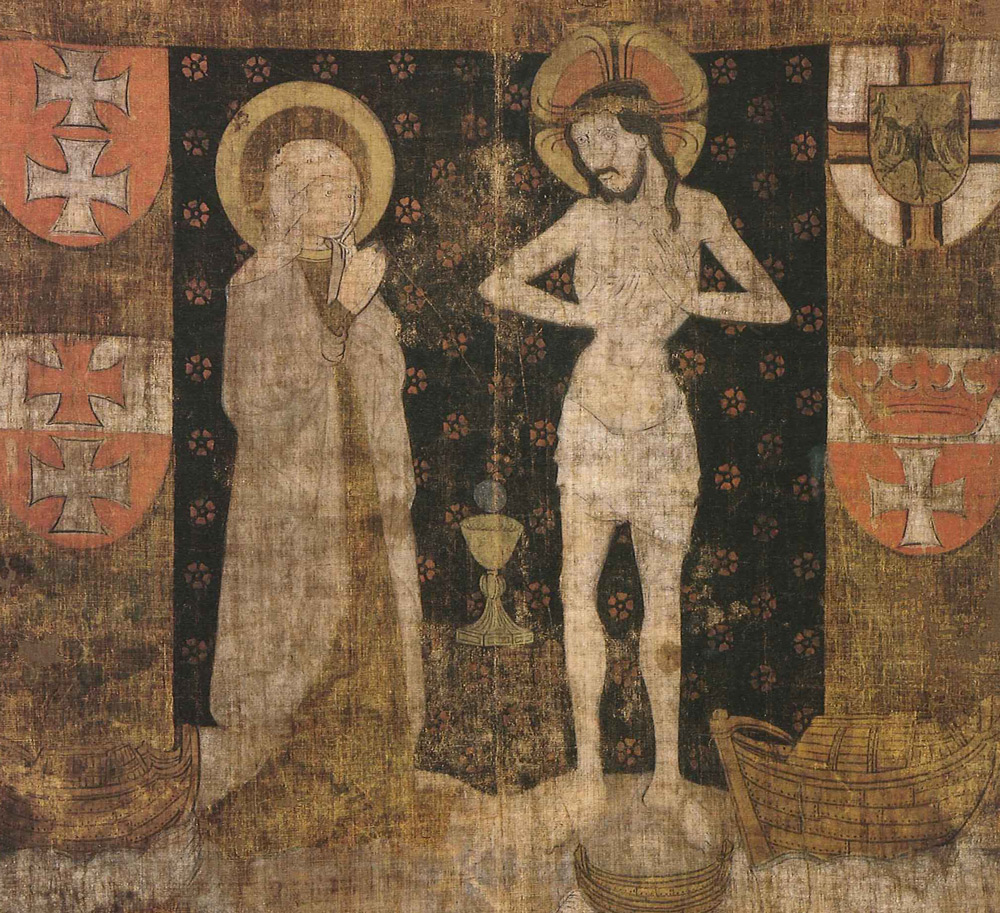
Painted and printed cloths Banners painted with a brush and printed with wooden blocks were hung inside the church. The donors of this banner are represented here by the coats of arms of three Hanseatic cities in the State of the Teutonic Order. They express the hope for the Virgin's intercession with her Son, depicted here as the Man of Sorrows. Fig.: Banner with the Man of Sorrows and Mary, Gdansk (?), c. 1400, painted and printed linen cloth, inv. no. 4443

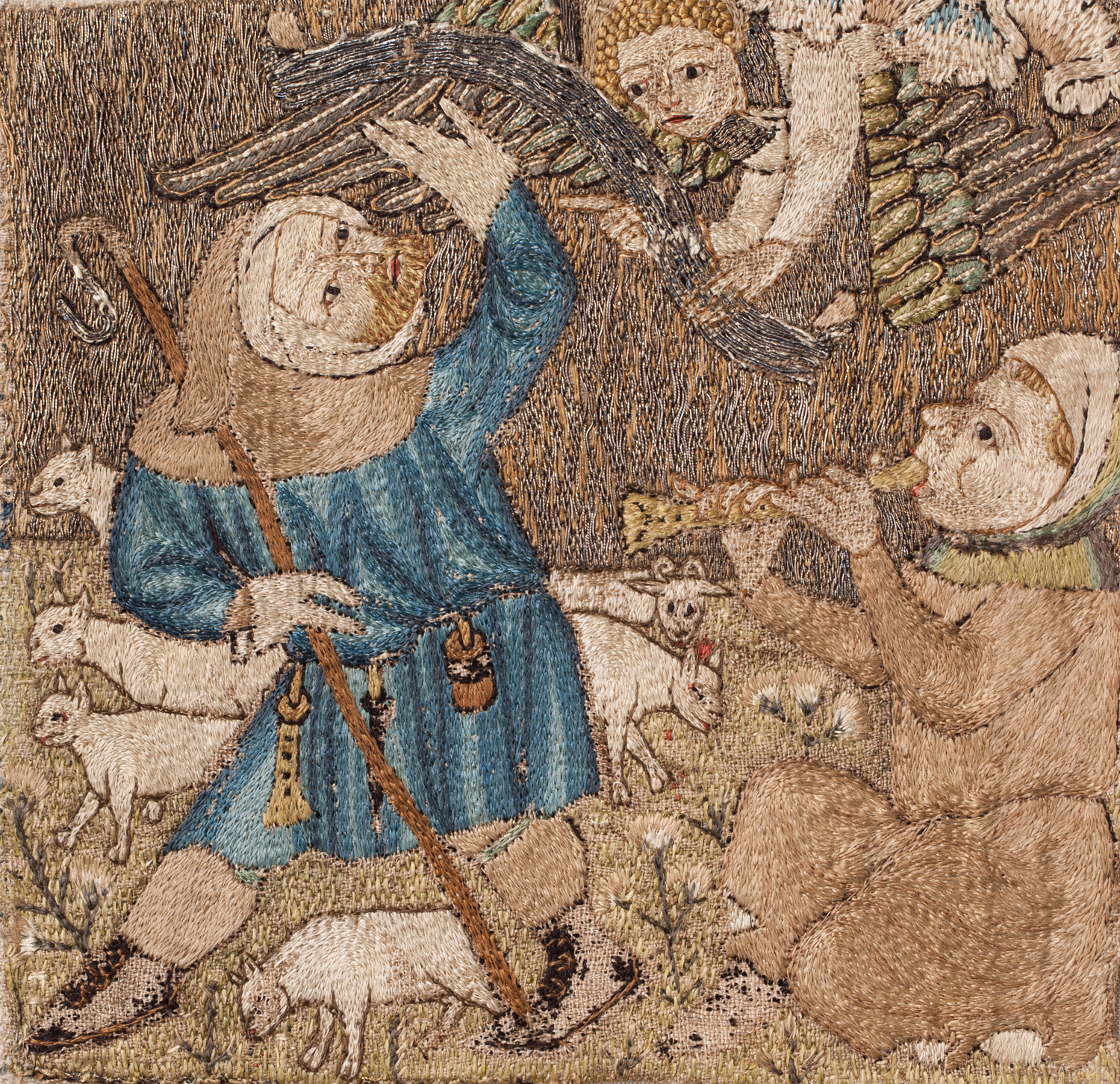
Embroidery The embroideries on liturgical vestments vividly tell stories from the life of the Virgin, Jesus and the saints. Using needle and thread, the embroiderers realized their own compositions or those of well-known painters. Fig.: Annunciation to the shepherds, England, late 14th to early 15th century, embroidery in gold and silk threads on linen cloth, inv. no. 153

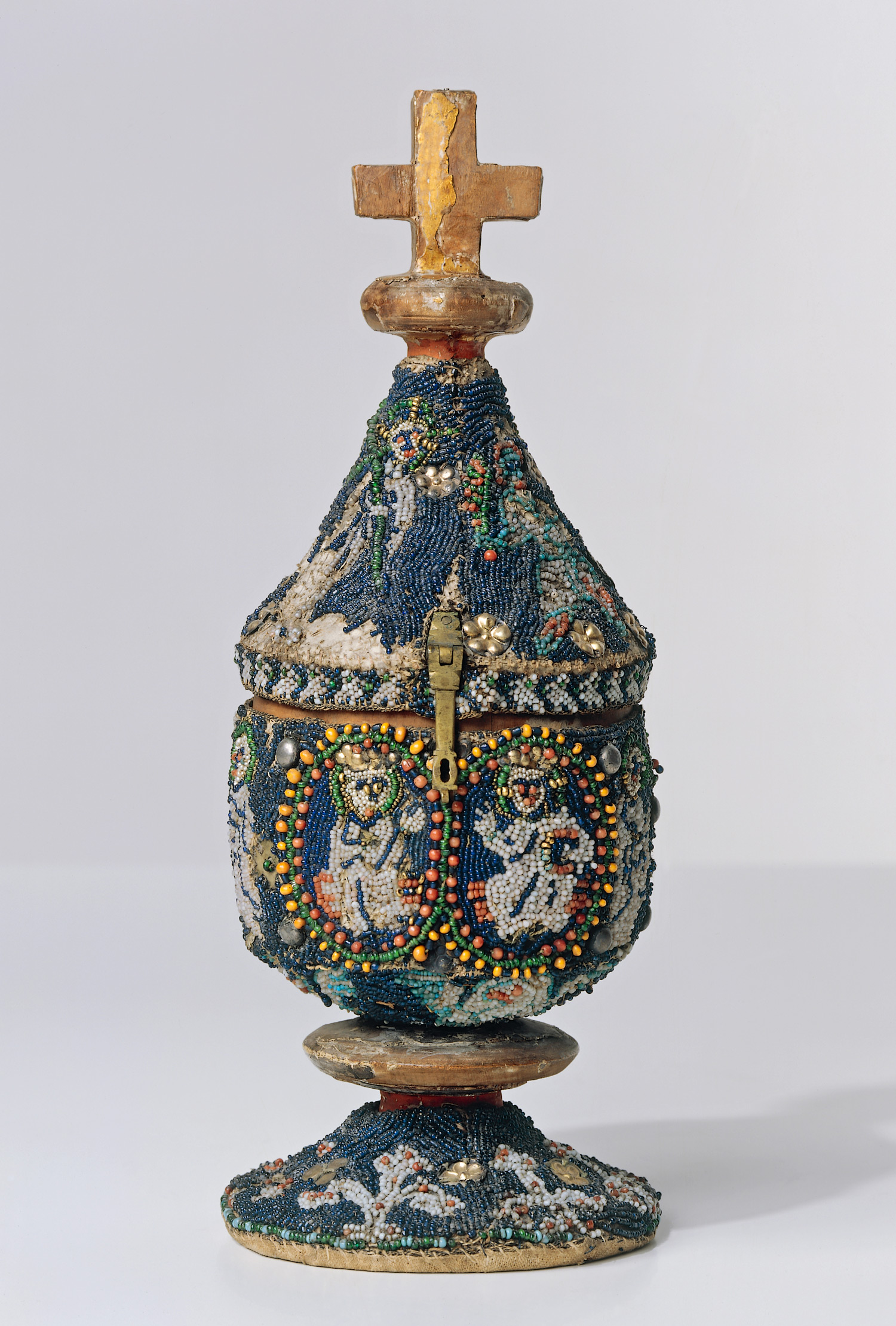
A treasure made of pearls for the Blessed Sacrament The ciborium from Hildesheim (now in the Schnütgen Museum in Cologne) contained the consecrated host. Covered with countless glass beads and freshwater pearls, corals and metal appliqués, it is an exquisite work of art from a treasury. Fig.: Ciborium, Lower Saxony, Hildesheim (?), 2nd half of the 13th century, Cologne, Museum Schnütgen, inv. no. 42